
Tomato Newsletter No. 232 - December 2020
Your monthly resource on working capital, process optimization, and issues related to the world of corporate treasurers, IT professionals, and bankers!
This newsletter is bilingual, English or German, depending on the source.
Introduction
This year was undoubtedly unusual, full of uncertainty and caution. Nevertheless, you and your companies have weathered the storm. We, too, have navigated the unexpected situation and are operating as best as possible under the new circumstances, but mostly as usual. It has been a privilege for us to keep you up to date with Tomato Catch-up. We would like to take this opportunity to thank you for your loyal readership and your feedback.
This month’s Catch-Up includes topics such as Supply Chain Finance, Cashless Economy, Cybersecurity, Artificial Intelligence, Data Protection Laws in the US, and Central Bank Digital Currencies.
Remember that for any challenge related to your financial issues, you can ask Martin Schneider for a discussion that will clarify it. Contact Martin via email or call +41 44 814 2001.
- Structured Finance 2020: What a Success!
- Tomato's 2020: Additional Office Space for Virtual Sessions
- From Nov-Newsletter: Supply Chain Finance
- Studie: Cyberbedrohung im DACH-Raum
- Chancen und Risiken von digitalem Notenbankgeld; Central Bank Digital Currencies
- Datenschutz-Gesetze und Zugriffe durch US-Behörden.
- Navigating Your Way Through Cybersecurity
- Why Most Organizations’ Investments in AI Fall Flat
- Most Read Tomato Articles of 2020
- Termine & Events
- From the Desk of Tomato
1. Structured Finance 2020: What a Success!
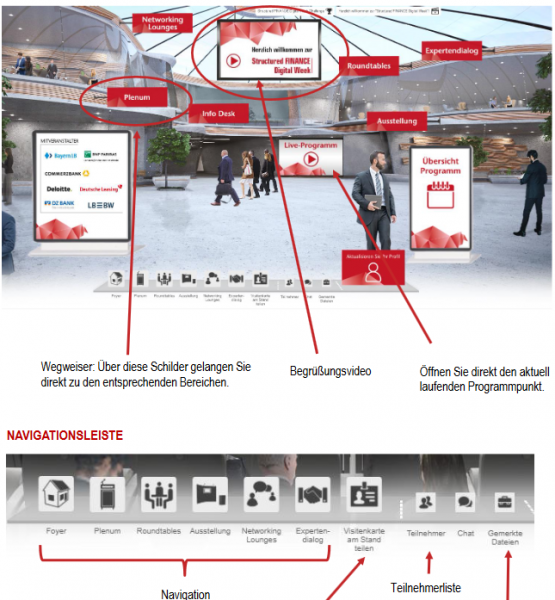
Same as every year, the Structured Finance Convention is a highlight for the German corporate finance world. This year with Covid-19, it was held virtually; and the result, at least for us, has been amazing. Initially, we hesitated about participating. We wondered how to
- make contacts
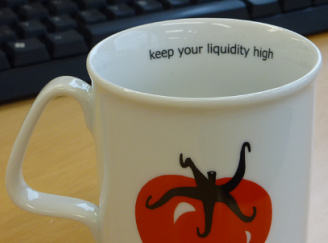
- get the “famous” Tomato cups filled with black brewed coffee to our finance community.
However, the coordinators convinced us that the Structured Finance Convention has more value when Tomato Cult Cups are part of it.
Once started, the virtual convention was finally much easier than I thought. At first, I was suspicious on the technical side and I kept wondering if participants would have enough time to receive, read, and also answer everything that was on chat.
Often, we greeted and interacted with old friends and clients, which we met in the chat room.
Moreover, we met new people and established first contacts. Of course, visitors are also regularly present in sessions and online meetings. Due to Corona, we plan video meetings via our new video office room with some of our new contacts.
Some interesting links for me where:
https://www.finance-magazin.de/finance-events/structured-finance/
https://www.finance-magazin.de/events/structured-finance/content-hub/themen-der-beilage/sf-treasury/
https://www.finance-magazin.de/sf-content-hub/treasury/intransparenz-und-risiken-verringern-2067921/
2. Tomato's 2020: Additional Office Space for Virtual Sessions
By Martin Schneider
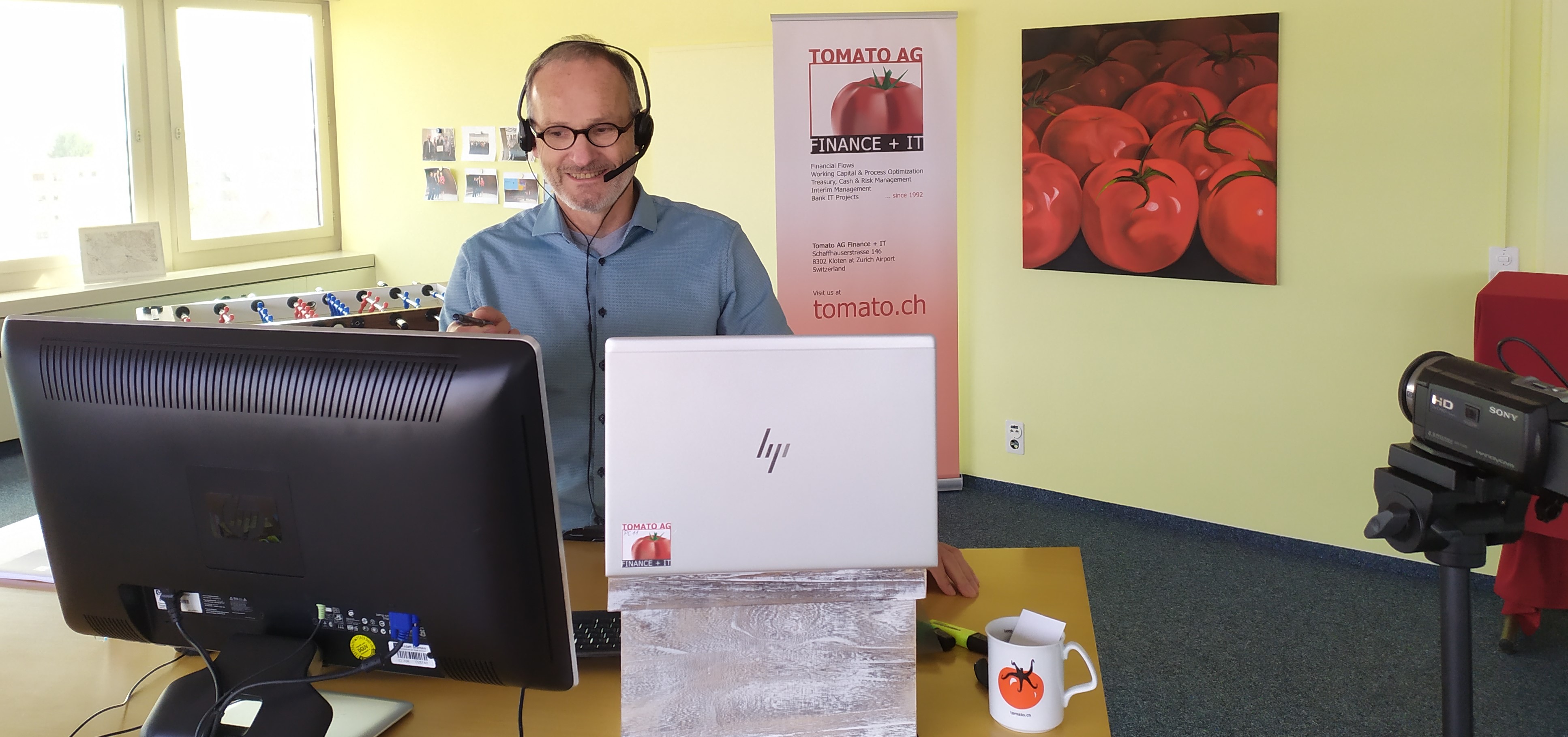
In mid-2019, we added a new room to our existing office, mainly because it is adjacent to our office and it was available. Not that we needed it. Now it turns out to be a big bonus, as we have converted the room into a video and recording studio with several cameras.
Since this summer we have been conducting many virtual meetings, which proved to be an advantage as we were able to conduct our business in style.
Not to mention that we also enjoy the foosball table (Töggelikasten); we can take a break and realign our thoughts when we find it necessary.
Honestly, all the video sessions wouldn’t have been possible in the existent office space.
3. From Nov-Newsletter: Supply Chain Finance
By Martin Schneider.
In last month’s newsletter, we reported on a Swiss vendor financing tool and asked our community via newsletter whether vendor financing could at some point serve as a module and be included in a financial management system.
Several of you have provided feedback explaining that many companies especially those that are cash rich are looking for diverse investments; and Vendor Finance may be a good tool to do that. With this system, banks are not essentially the partner institute. Instead, the partner for Vendor Finance is the group treasury itself.
Check again Details in the Tomato November newsletter… or check also some Screens of the Vendor System on our Site.
4. Studie: Cyberbedrohung im DACH-Raum
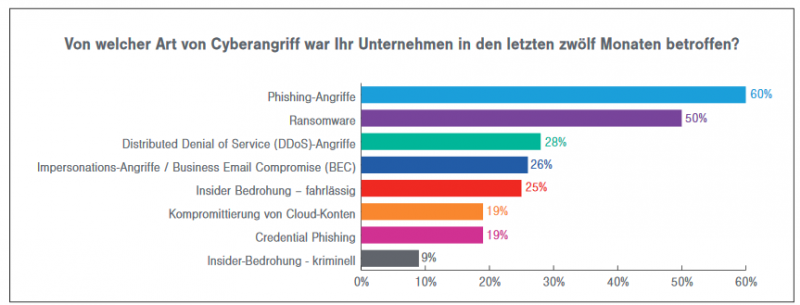
Die Cyberbedrohungslandschaft im DACH-Raum entwickelt sich rasant weiter. Dabei haben es Cyberkriminelle zunehmend auf Menschen anstatt auf IT-Infrastrukturen abgesehen. Von E-Mail-basierten Bedrohungen, wie Business Email Compromise (BEC) bis hin zu Phishing von Anmeldeinformationen, kompromittierten Cloud-Konten und Ransomware-Angriffen – Cyberkriminelle sind sich bewusst, dass Mitarbeiter leicht ausgetrickst werden können.
Die Aufklärung der Mitarbeiter und das Sicherheitsbewusstsein machen häufig den Unterschied zwischen einem versuchten und einem erfolgreichen Cyberangriff.
Im Juli und August 2020 wurden 202 Unternehmen mit 250 oder mehr Mitarbeitern aus verschiedenen Branchen befragt.
Details im Bericht von Proofpoint
5. Chancen und Risiken von digitalem Notenbankgeld; Central Bank Digital Currencies
Zentralbanken rund um den Globus arbeiten intensiv an der Umsetzung von elektronischem Notenbankgeld.
Die Bank für Internationalen Zahlungsausgleich (BIZ) erstellte in Zusammenarbeit mit sieben Zentralbanken – darunter die SNB – einen gemeinsamen Bericht in Englisch zu digitalem Notenbankgeld (Central Bank Digital Currencies, CBDC)
„The Market“ aus der NZZ fasst das Wichtigste in Deutsch zusammen.
Do you prefer English? Central banks have been providing trusted money to the public for hundreds of years as part of their public policy objectives. Trusted money is a public good. It offers a common unit of account, store of value, and medium of exchange for the sale of goods and services, and settlement of financial transactions. Providing cash for public use is an important objective for central banks.
Commercially provided, fast and convenient, digital payments have grown enormously in volume and diversity. To evolve and pursue their public policy objectives in a digital world, central banks are actively researching the pros and cons of offering a digital currency to the public (a “general purpose” central bank digital currency - CBDC). Understanding CBDCs has advanced significantly in the last few years. Published research, policy work, and proofs-of-concept from central banks have gone a long way towards establishing the potential benefits and risks.
Details in English by BIS Basel
6. Datenschutz-Gesetze und Zugriffe durch US-Behörden.
Der Europäische Gerichtshof (EuGH) hat in seiner am 16. Juli 2020 veröffentlichten Entscheidung "Schrems II" die als Privacy Shield bekannte Rahmenvereinbarung zwischen den USA und der EU für ungültig erklärt. Somit ist das US-EU Privacy Shield keine genügende Rechtsgrundlage für einen Datentransfer in die USA.
Der Eidgenössische Datenschutz- und Öffentlichkeitsbeauftragte (EDÖB) kam in seiner Stellungnahme vom 8. September 2020 auf das US-Swiss Privacy Shield zum gleichen Schluss für Schweizer Unternehmen und hat als Resultat auf seiner Staatenliste den Verweis "angemessener Schutz unter bestimmten Voraussetzungen" für die USA gestrichen.
Die Hauptgründe: Personenbezogene Daten in den USA sind nicht ausreichend vor den US-Behörden geschützt und es gibt keine hinreichenden Rechtsschutzmöglichkeiten für die betroffenen Personen.
Artikel in Deutsch bei Netzwoche

7. Navigating Your Way Through Cybersecurity
Cybercrime is everywhere, and it’s evolving. The guide helps treasurers take action to protect their organization’s “crown jewels” and create a secure technical environment as well as day-to-day processes. Learn more about what can be done now and how the right vendor can help. This guide covers:
- How to manage user access and why it’s important;
- What goes into a secure technical environment;
- How process optimization supports secure, compliant operations;
- A sneak peek at the power of community intelligence in treasury.
Order, download, and read the Bellin Study
8. Why Most Organizations’ Investments in AI Fall Flat
In the November newsletter, we featured Board of Directors Are Accelerating Digital Business Initiatives Due to Corona with AI. It referred to the 2021 Gartner Board of Directors Survey, which aimed at understanding how boards of directors view digital-business-driven business model evolution in their enterprises along with the role of the CIO and other executive leaders, specifically in the context of the COVID-19 crisis.
An article published in the Harvard Business Review and sponsored by PWC explains why most organizations’ investments in AI fall flat.
According to PwC, up to 85% of executives know AI can fundamentally change their businesses. However, 76% of organizations barely broke even with their investments in AI capabilities, with only 6% having AI initiatives scaled across the enterprise, according to an AMM survey.
Challenges:
- It is much harder to put AI into production;
- Organizations are relying on existing talent and processes oriented to software development than to the dynamic nature of AI;
- There is a lack of governance structures to monitor AI effectively.
Read details English at Harvard Business Review
9. Most Read Tomato Articles of 2020
- The Introduction of the QR-bill: 30 June 2020 – read more in our April 2020 issue
- OECD’s New Guidelines on Transfer Pricing and Cash Pools: how intercompany financing transactions should be priced in the light of OECD’s new guidelines for financial transactions – read more in our August 2020 issue
- Cash Flow Hedges in der OR-Rechnungslegung in our Nov 2020 issue
- LIBOR Mitigating Risks: transition risks when mitigating from Libor to new national rates as ESTR EUR, SARON CHF, SOFR USD and SONIA GBP etc. – read more in our Nov 2020 issue
- Knowledge Toolkit: Why ESTR is going in effect? In our Aug 2020 issue
- EU-Treasury-Infrastruktur: Gateways, Formate Systeme aus Sicht der Treasurer in our Sept 2020 issue
- Finanzplatz Schweiz: QR Invoice Scanning with Bellin TM5 for Swiss Companies. In our Sept 2020 issue
- SAP Bellin API Link / Schnittstelle in our May 2020 issue
- CH-Rechnungslegung: Publikationen mit verständlichen Beispielen in our April 2020 issue
Upcoming events:
- 10.12.2020 EY Entwicklungen im Bereich Anti-Financial Crime
von 09.30-11.00 Uhr - 03.02.2021 PwC Robotic Process Automation (RPA) Webcast
Ein Kunde gibt Einblicke von 16.00-17.00 Uhr - 21.4.2021: KPMG Digital Treasury Summit 2021 #DTRS
Im Jahr 41 verurteilte der römische Senat den Geschäftsmann Seneca zum Tod, angeblich weil er eine Affäre mit der Schwester des jüngst verstorbenen Kaisers Caligula hatte. Zu Senecas Glück wandelte Kaiser Claudius das Todesurteil in einen Bannspruch um. Seneca verbrachte acht Jahre in Korsika. Die Insel war einer der rohesten Winkel des Römischen Reichs. Seneca war jedoch ein Stoiker und konnte damit umgehen.
Im NZZ Artikel Stoa und Corona: was uns Seneca hier und heute zu sagen hat, rät Rolf Dobelli, dass wir im “Lockdown-Light” wegen COVID anstelle von Jammern und Hadern besser fragen, wie uns die Corona-Situation als Menschen reifen lässt.
Lassen Sie uns die Zeiten so durchstehen, dass wir persönlich gereift, gestärkt - ja gestählt hervorgehen. Mit dieser Denkweise werden wir diese Zeit mit Bravour überstehen:
- Hören Sie auf zu lamentieren, denn das ist ineffizient.
- Akzeptieren Sie, dass Sie kein grösseres Wissen bezüglich Covid-19 haben als die Experten.
- Seien Sie grosszügig. Die Erfahrung zeigt, dass das Ende der Welt nicht stattfindet.
- Weisen Sie Covid-19 den richtigen Platz in Ihrem Leben zu. Nicht nur als Gesellschaft, auch individuell haben die meisten von uns Schlimmeres erlebt (und werden Schlimmeres erleben) als ein Partyverbot, Fussball-Geisterspiele, Homeschooling oder beschlagene Brillengläser über der Maske.
- Denken Sie, dass wir den Tod stets in uns tragen. Er ist Teil unseres Lebens.
- Selbst im denkbar strengsten und längsten Lockdown sind wir noch immer frei. Auch ein Sklave ist frei im Wichtigsten – nämlich in seinen Gedanken. Niemand kann ihm diese Freiheit rauben. Das sagte der grosse Stoiker Epiktet, der wusste, wovon er sprach – er war selber Sklave und körperlich behindert.
Lesen Sie den NZZ Bericht von Rolf Dobelli wenn Sie mögen!
Rolf Dobelli ist Gründer der Wissenscommunity «world.minds» und Schriftsteller. 2019 ist von ihm das Werk «Die Kunst des digitalen Lebens» erschienen (Piper-Verlag). (Interview im Schweizer Fernsehen 55 Min)
Let me close with our Christmas and New Year wishes send traditionally in the mail to a selected number of clients and friends.
Enjoy Martin and the TOMATO Team